
Terroir
Soil diversity
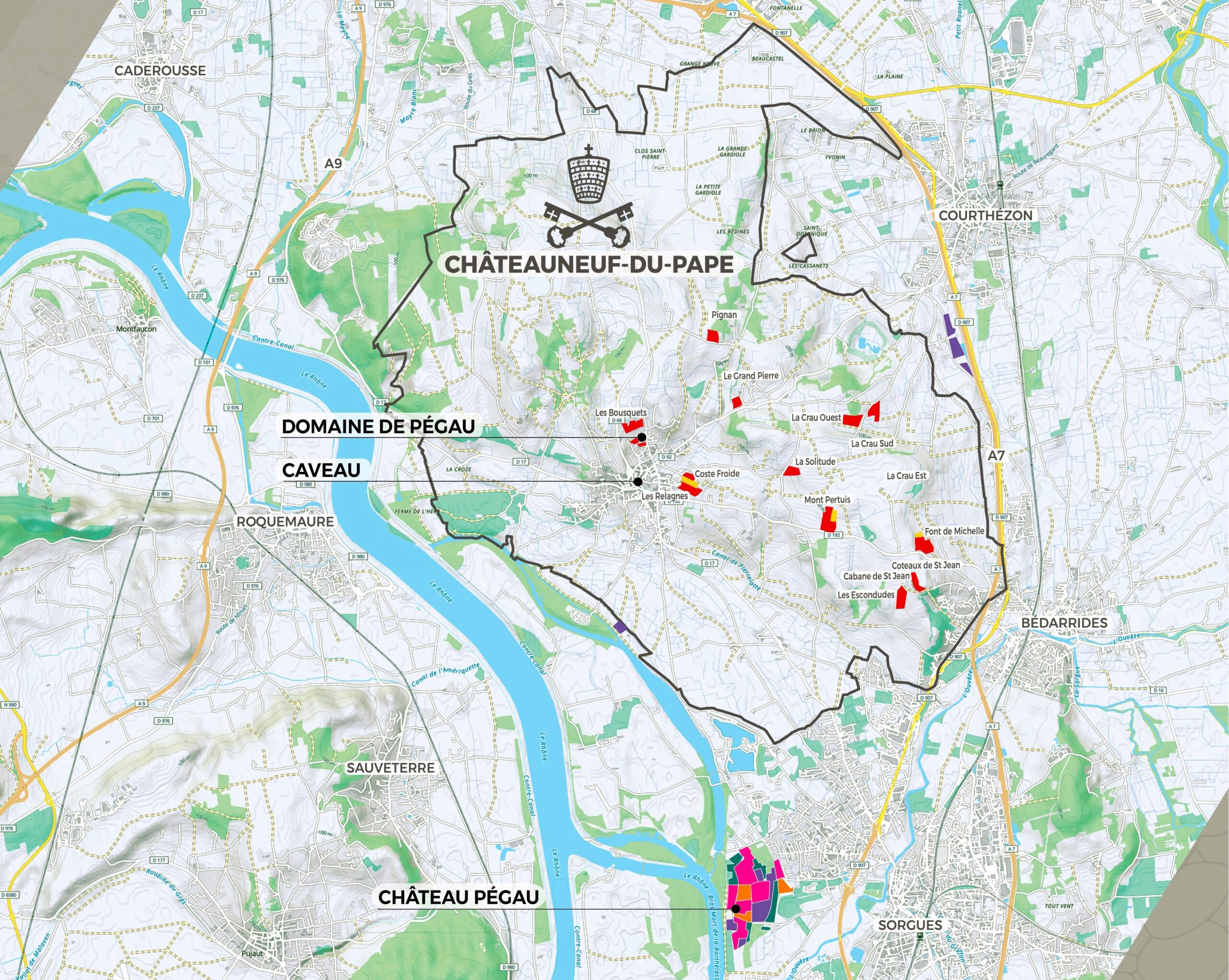
There are three terroirs in Pegau's vineyards: Rolled pebbles, the sands, clays and sandstones.
Rolled pebbles
the soul of the land
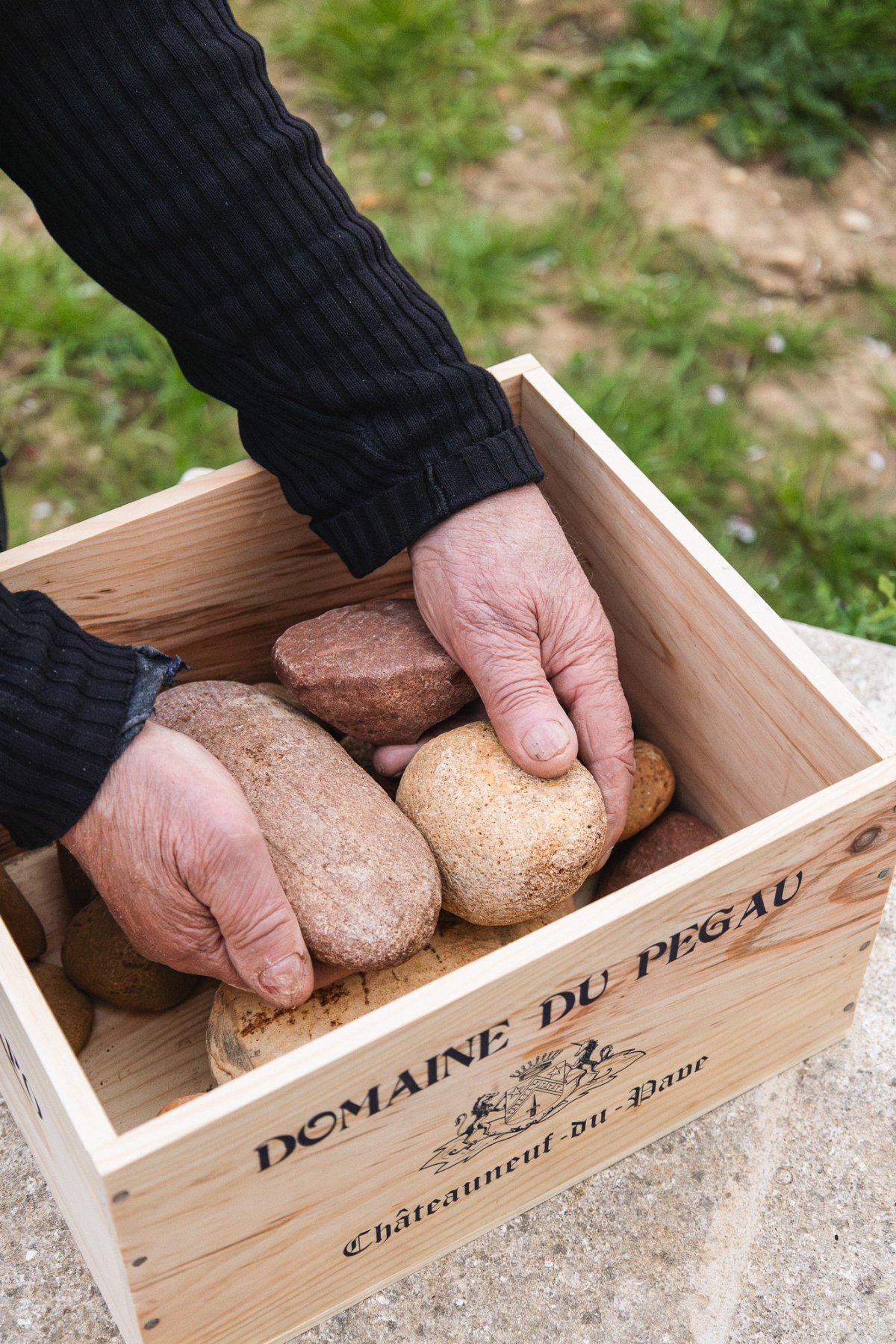
Symbols of the appellation, rolled pebbles trace their origins back to the Quaternary era, some 2.6 million years ago. Transported from the Alps by the ancient courses of the Rhône, these pebbles were deposited over time to form the emblematic soils of Châteauneuf-du-Pape. These quartz stones store heat during the day and release it at night, promoting optimal ripening of the grapes. They also prevent evaporation, counter runoff and maintain soil humidity during dry spells.
They give rise to powerful, sun-drenched wines with aromas of ripe black fruit, spices and garrigue, and remarkable ageing potential. This is the ideal terrain for Grenache, the appellation's king grape variety.
The sands
finesse and elegance
Lighter and very draining, sandy soils produce wines of great aromatic finesse. Tannins are softer and fruit expression particularly pure.
They will produce quite fine, purified wines, of great elegance, with silky tannins.
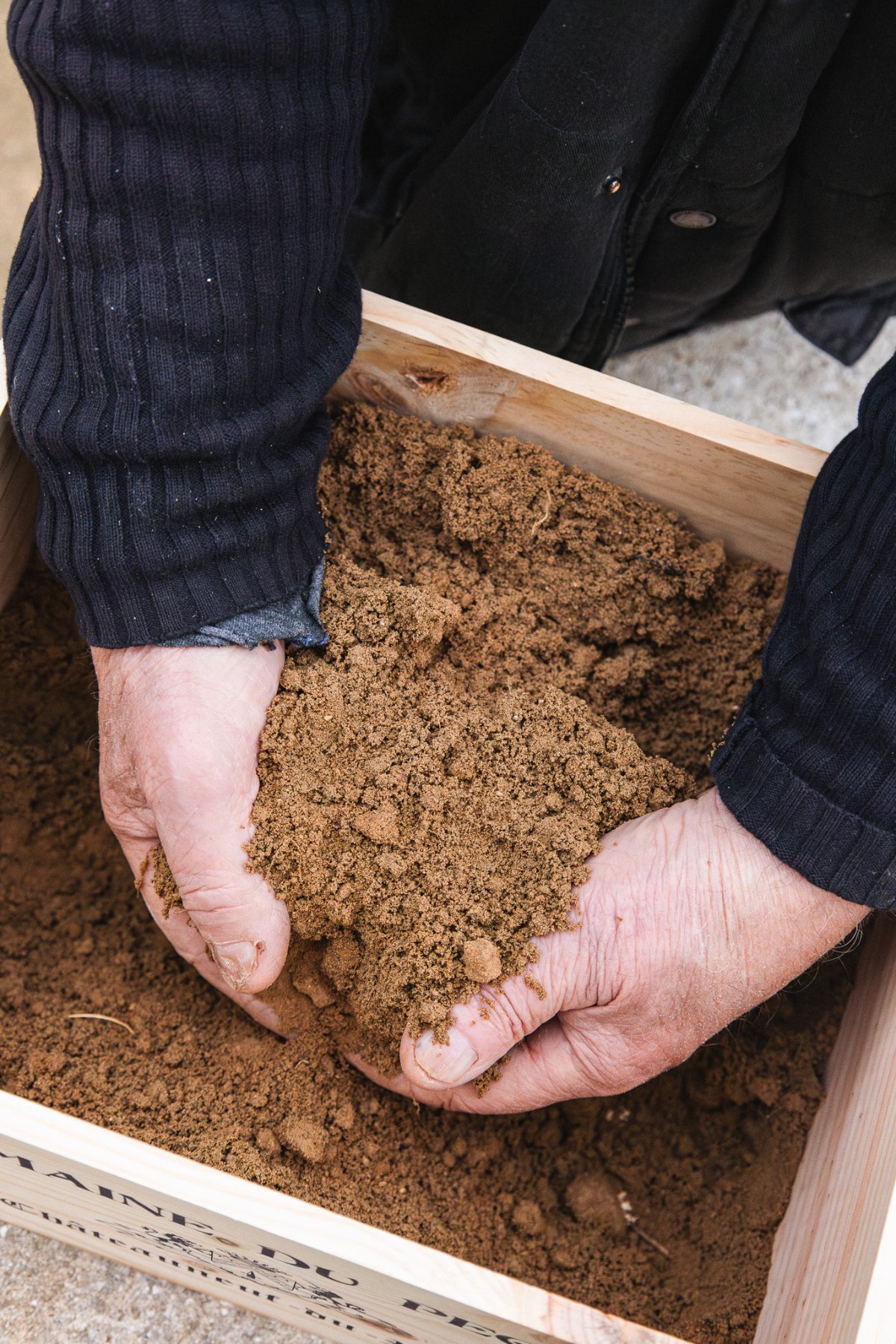
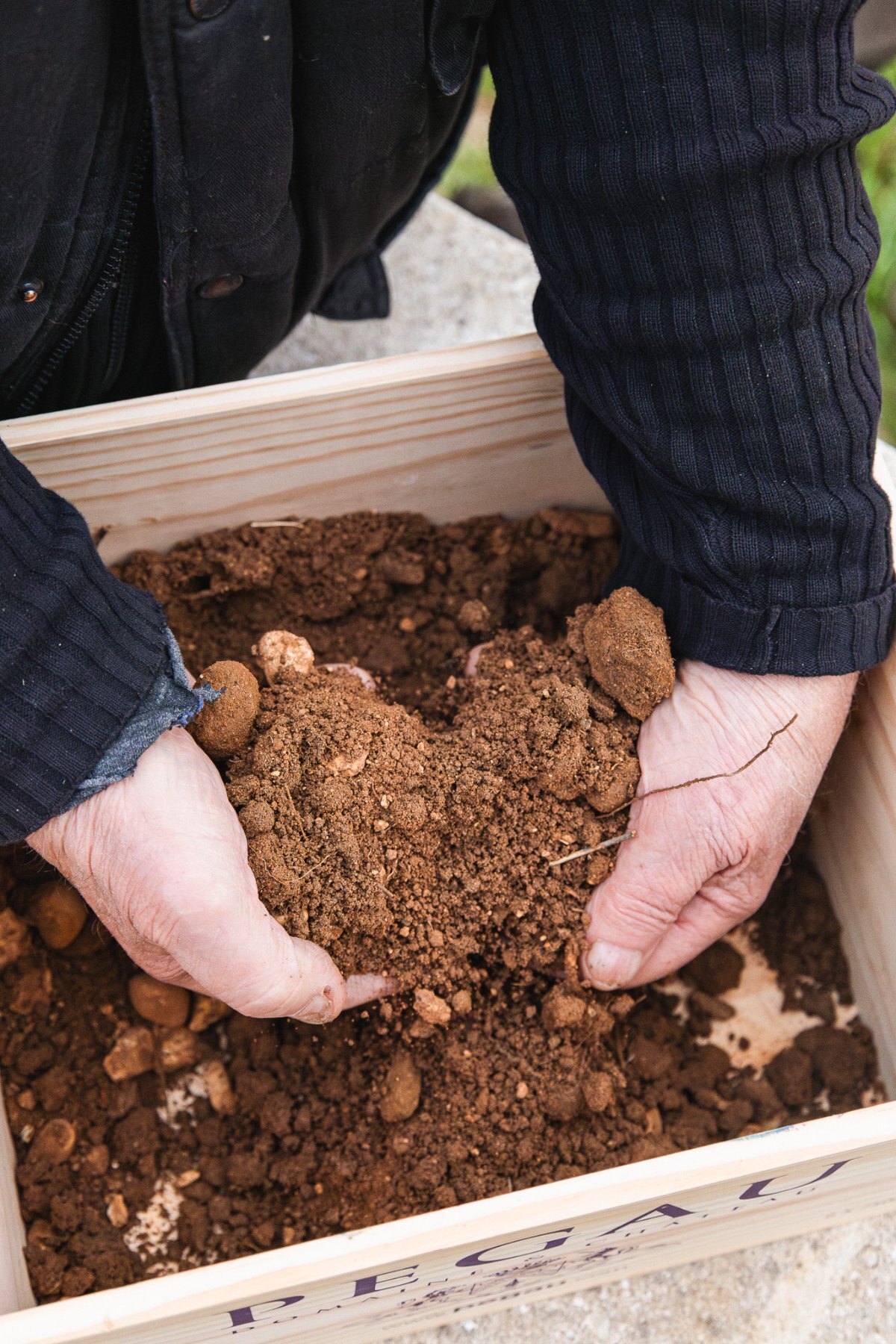
Clays and sandstones
richness and balance
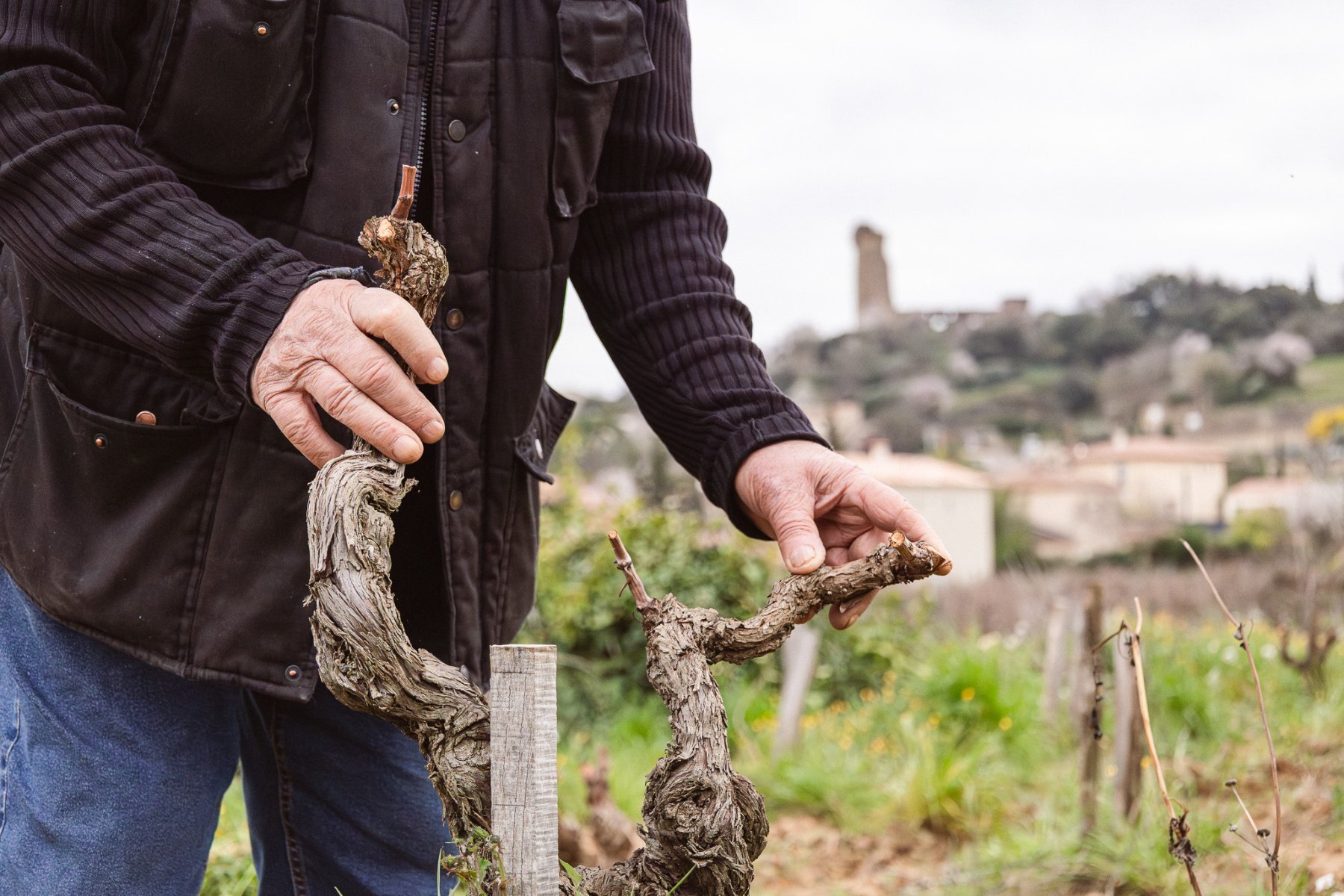
The sandstone will add’shine and voltage in the appellation's wines. These wines are marked by very ripe, acidic red fruit. Intrinsically linked to the ancient terrace of rolled pebbles, the red clays represent the vineyard's mineral vault. Rich in iron oxide, ...the clay soils provide the vines with the minerals they need and produce deep, complex wines with a lively structure and notes of licorice.
The influence of climate
Mediterranean
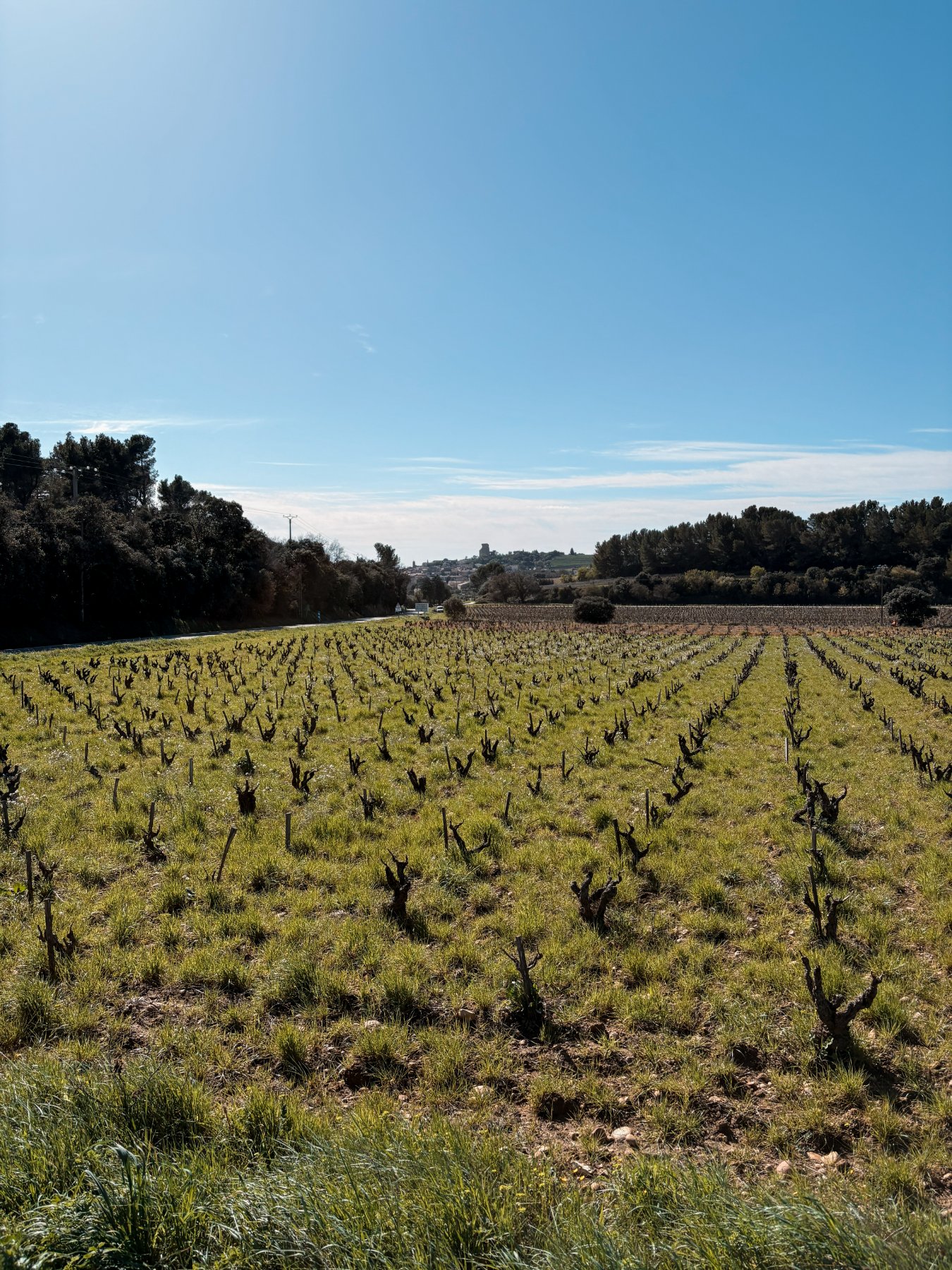
Châteauneuf's climate has a Mediterranean influence. The vineyards are located in the driest sector of the Côtes-du-Rhône. It is characterized by its very high luminosity and, quite often in summer, by marked dryness with temperatures easily approaching 34 to 38°C. Precipitation, which is scarce, is also irregular. One of the essential characteristics of the climate is the very frequent occurrence of the Mistral. A key element appreciated by winegrowers, this northerly wind reduces rainfall and thus limits vine diseases. On the eve of the harvest, it increases the sugar concentration of the grapes and dries them out after the rain, preventing cryptogamic diseases from developing. Finally, in spring, its breath protects the vines from frost by creating air flows.